




If you are moving to Germany from Dorset, you are joining a growing number of UK expats making the same move, and it is not hard to see why.
The country offers strong wages, excellent public transport, a lower cost of living than much of the South of England, and easy access to the rest of Europe, all of which make Germany an attractive place to put down roots.
But a Dorset-to-Germany relocation is a bigger undertaking than a move a few miles away or across the county, and post-Brexit residency rules mean there is more planning, and more cost, involved than there used to be.
We help you traverse the practical side of moving to Germany from Dorset in 2026: the residency and visa route, realistic costs, where to live, shipping your belongings, and settling in once you arrive.
RH Pardy looks forward to helping you make your life in Germany happen with minimum stress and a smooth relocation.
A Short Overview of This Blog
If you are weighing up moving to Germany from Dorset, here is what is involved, from residency paperwork to packing day costs.
- Residency and visas: UK citizens no longer have free movement, but a useful rule lets you enter visa-free and apply for your residence title once you are already in Germany.
- Choosing a city: Berlin, Munich, Hamburg, Frankfurt and Cologne all draw UK arrivals for different reasons, from job markets to lifestyle.
- Costs: rent and everyday costs in most German cities compare favourably with the South Coast, though Munich is the exception, and removal costs depend heavily on volume.
- Shipping your belongings: road freight is the usual route from Dorset, with customs rules that reward planning ahead rather than leaving it late.
- Registering your life in Germany: Anmeldung, health insurance and a German bank account all need sorting in your first weeks.
- Using a BAR registered Mover: Why this is an important step when choosing a reputable mover.
- Working with RH Pardy: what a Dorset-based international mover actually does for you on a move like this.
By the end, you should have a clear sense of the order to tackle things in, what it will likely cost, and where the real pinch points are.
Why So Many Britons Are Choosing Germany

Germany’s pull for UK movers is fairly consistent across the people we speak to.
It is Europe’s largest economy, with a deep job market in engineering, tech, finance and healthcare. Wages are competitive, public transport is genuinely good enough to live without a car in most cities, and healthcare and childcare provision is generally well regarded.
For families and professionals coming from Dorset, it often reads as a step up in infrastructure without the price tag of London or the Southeast.
It is also simply a well-connected base. Being in central Europe rather than on an island makes weekend trips to Paris, Amsterdam or Prague a train ride rather than a flight, which matters to many people making the move.
Its proximity to the UK also means you are well within easy reach for family and friends; from some locations in the UK, you can get to Germany within an hour and a half, often quicker than reaching London!
Residency in Germany: Visas and Permits After Brexit
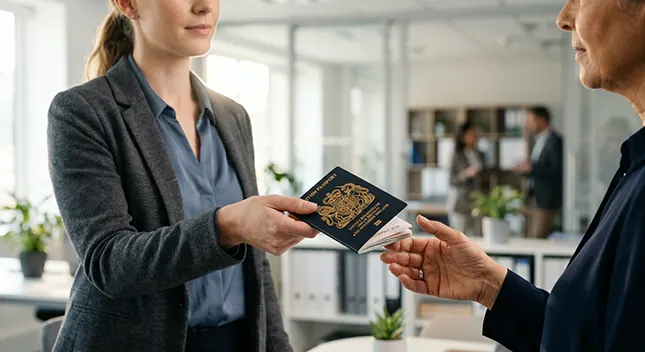
Free movement between the UK and the EU ended in January 2021, and UK nationals are now treated as third-country citizens under German immigration law.
That means a straightforward tourist stay is fine, but living, working or studying in Germany requires the right paperwork.
The Schengen rule still applies for short visits: up to 90 days within any 180-day period without a visa.
For anything longer, you will need a residence title. Full details sit with the German Federal Foreign Office, which is worth bookmarking as you plan.
One thing that works in Britons’ favour is a provision under Section 41 of Germany’s Residence Ordinance.
UK citizens are classed as “privileged nationals”, which means you can typically enter Germany without applying for a visa in advance and instead apply for your residence title after you arrive, provided you do so within 90 days of entry.
That does not remove the requirement to qualify for a residence permit; it just means the paperwork happens on German soil rather than at a UK-based consulate before you leave.
The main routes people use
- EU Blue Card: for skilled professionals with a recognised degree and a job offer above the salary threshold, with a faster route to permanent residence.
- Standard work visa: for employed roles that do not meet Blue Card salary levels but come with a genuine job offer.
- Freelance visa (Freiberufler): for self-employed professionals, particularly in creative, consulting and IT fields.
- Family reunification: for joining a spouse, partner or family member already resident in Germany.
From 2026, UK travellers also need to factor in ETIAS, a simple pre-travel authorisation similar to the UK’s own ETA scheme, which applies even to short Schengen visits.
The good news? It takes minutes to complete online and is separate from any residence permit application.
Choosing Where to Live in Germany

Germany is a country of strong regional cities rather than one dominant capital pulling in every mover, so choosing where to live is a real decision, not a formality.
- Berlin: the obvious draw for creatives, start-ups, and anyone wanting a lower cost of living than most other major European capitals, with a large, established English-speaking community.
- Munich: Germany’s wealthiest city and home to major employers in engineering and technology, but also the most expensive place to rent, often closer to Southeast England prices than the rest of Dorset.
- Hamburg: a port city with a strong maritime and trading heritage, popular with families for its green space and canals.
- Frankfurt: the financial centre, with the most international workforce of any German city and strong flight connections back to the UK.
- Cologne: a relaxed, mid-sized city on the Rhine with a lower cost of living and an easy-going reputation.
Wherever you land, it is worth spending time on sites like ImmoScout24 before you commit, since rental markets in the larger cities move quickly and viewings often need to happen in person.
For more information about the best places to live in Germany for UK expats, refer to the Live in Germany website.
Costs: What to Budget for Your Move and Your New Life

Cost of living, Dorset compared with Germany
For most people moving from Dorset, day-to-day costs in Germany feel comparable or slightly lower, with a few notable exceptions.
Rent outside Munich and central Berlin is often more affordable than equivalent properties in Bournemouth, Poole or Christchurch, particularly for larger family homes.
Groceries and eating out track fairly closely to UK prices, while public transport is usually cheaper and considerably more extensive, which can offset the cost of running a car.
Utility bills and childcare costs vary a good deal by region and are worth researching for your specific target city rather than assuming a national average, since local authorities in Germany have more influence over pricing than councils typically do in the UK.
You can run a cost of living comparison via the Numbeo website so that you are fully aware of what to expect when you arrive.
What a Dorset to Germany move itself costs
Removal costs are driven by volume, distance, access in Germany (many city homes have very limited parking), apartment living is popular, and some have no lifts; using hoists to access windows rather than doors is common.
All these factors will affect the cost, making a rough estimate almost impossible.
When it comes to transporting your consignment, if you have only a small number of belongings, they will most likely be sent by road, which involves sharing a vehicle with other consignments.
A full house move, which completely fills a vehicle, is slightly quicker timewise, obviously, because it is a direct service from your home to the final destination.
A thorough pre-move survey with a professional surveyor will determine the best method for your particular move.
Professional packing, a detailed customs inventory and any storage you need on either end are usually quoted separately, which is why a home survey gives a far more reliable figure than an online calculator.
Shipping Your Belongings from Dorset

Once the visa side is under control and you are ready to go, the practical question becomes how to get your possessions from Dorset to your new German address.
Most household moves from the South Coast to Germany go by road freight, which is usually the most cost-effective option and typically takes three to ten days door to door, depending on your exact locations and how straightforward border processing is on the day.
Customs rules to plan around
- Items shipped as personal effects must have been owned and used by you for at least six months before the move to avoid import duty and tax.
- You generally have twelve months from your relocation date to bring the rest of your belongings over, which is useful if you are shipping in more than one load.
- A detailed, itemised inventory is required for customs clearance, which a removals company experienced in European moves will prepare for you.
- Products of animal origin, along with certain plants and plant products, face restrictions entering the EU and are best left behind or replaced locally.
Full rules and regulations around importing personal effects into Germany are available via the Germany Handbook website.
Full loads, part loads and smaller box shipments are all options depending on how much you are taking, so it is worth having a proper survey done rather than guessing at volume.
Storage in Dorset or Germany can usually be arranged if your dates don’t line up neatly.
Settling In and Getting Organised in The First Few Weeks

Anmeldung: registering your address
Within two weeks of moving into a permanent address, you must register it at your local Einwohnermeldeamt, known as Anmeldung. This single piece of paperwork unlocks almost everything else, from opening a bank account to getting a tax number, so it genuinely pays to do it early rather than treating it as an afterthought.
Health insurance
Health insurance is compulsory in Germany, and you will need to choose between the state system (gesetzliche Krankenversicherung) and private cover (private Krankenversicherung) depending on your income and employment status. Most employees default into the state system, while freelancers and higher earners often weigh up private options.
Banking and driving
Opening a German bank account is straightforward once you have your Anmeldung certificate, and most major banks offer English-language support in larger cities. UK driving licences can usually be used for a limited period after arrival, but check current exchange rules for your specific state, since requirements have shifted since Brexit and are not identical across all of Germany’s federal states.
Why Choose a BAR registered Mover
Choosing a removals company for a European move is not a decision to make on price alone. With customs paperwork, cross-border regulations, and your most valued possessions all riding on the outcome, it is worth knowing what separates a genuinely credentialled operator from the rest.
Membership of the British Association of Removers (BAR), the UK’s recognised trade body for the removals industry, is one of the clearest signals of that credibility. A company can’t simply buy it.
Member firms are independently audited every year and must operate under a Code of Practice approved by the Chartered Trading Standards Institute. They must also offer customers an Advanced Payment Guarantee, so your deposit is protected even if something goes badly wrong before the move takes place. The BAR website sets out the full details of what these protections cover.
For a move to Germany specifically, BAR membership tells you a company understands post-Brexit customs requirements, carries the right level of insurance, and has real experience handling European removals rather than treating them as an afterthought to domestic moves.
In a marketplace with plenty of operators and little to distinguish them on the surface, it is a genuinely useful shortcut to a trustworthy one.
How R.H. Pardy Helps with a Dorset to Germany Move
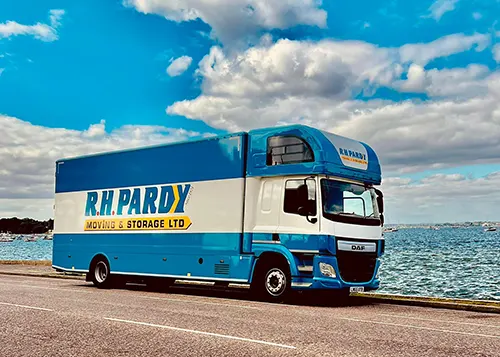
We have been moving families and businesses in and out of Dorset since 1924, and international relocations to countries like Germany have become a steady part of that work in recent years.
Our team surveys your home, gives you an honest volume estimate, and handles the customs documentation that comes with a post-Brexit move so you are not deciphering German import rules on your own.
We can also arrange short-term storage in Christchurch if your German property is not quite ready when you move out of your UK home.
If you are in the early stages of planning a move to Germany, our team is happy to talk through timings and put together a realistic quote well before your moving date.
As full BAR members, you can rely on a friendly, knowledgeable service tailored to your circumstances when you use Pardy’s.
To discuss your move, or if you have any questions, contact RH Pardy on 01795 423269, email enquiries@pardyremovals.com, or visit www.pardyremovals.com for more information
Frequently Asked Questions about Moving to Germany from Dorset
Do I need a visa to move to Germany from the UK?
You do not need a visa for short visits of up to 90 days, but for a genuine relocation you will need a residence permit. UK citizens can usually enter visa-free and apply for the permit after arriving in Germany, as long as they apply within 90 days of entry.
How long does it take to ship belongings from Dorset to Germany?
Most road freight moves take between three and ten days door to door, depending on your exact addresses and how smoothly customs processing goes on the day.
Will I pay import duty on my furniture and belongings?
Genuine personal effects you have owned and used for at least six months before the move are normally exempt from import duty, provided you properly declare them with an itemised inventory.
Which German city is cheapest to live in?
Munich is consistently the most expensive German city, closer to Southeast England pricing. Cities like Cologne and parts of Berlin tend to offer better value for renters coming from Dorset.
Can I still use my UK driving licence in Germany?
UK licences are usually valid for a limited period after you arrive, but exchange rules vary by federal state, so check the requirements for your specific region rather than assuming a single national rule.
Moving abroad always comes with more moving parts than a domestic relocation, but a Dorset-to-Germany move is very achievable with the right planning. Get your visa route sorted first, then build your shipping timeline around it rather than the other way round.
For a no-obligation chat about your move, get in touch with the R.H. Pardy team, and we will talk you through the next steps.