


If you are thinking about moving to Poole, you have chosen well. Dorset’s largest town sits at the heart of one of the most beautiful stretches of the South Coast, a place where one of the world’s largest natural harbours meets some of England’s finest beaches, and where a genuinely vibrant community life coexists with easy access to the open countryside of the Jurassic Coast and Purbeck Hills.
At R.H. Pardy Moving & Storage, we have been helping people move to and from Poole for over a century. We know this town in detail, its neighbourhoods, its character, and what makes each part of it right for different kinds of people. This guide covers everything you need to know about moving to Poole in 2026: property prices, the best areas to live, schools, transport, employment, leisure, and the things that make living here genuinely exceptional.
Where Is Poole?
Poole sits on the Dorset coast, roughly midway between Bournemouth to the east (around 5 miles) and the Purbeck Peninsula to the west. It is part of the Bournemouth, Christchurch and Poole (BCP) unitary authority area, which together forms the largest conurbation on the South Coast outside of Southampton.
Key distances by road include London at approximately 100 miles (around 2 hours), Cardiff at around 74 miles, and Southampton at 35 miles. By train from Poole station, London Waterloo is reachable in under two hours on direct South Western Railway services.
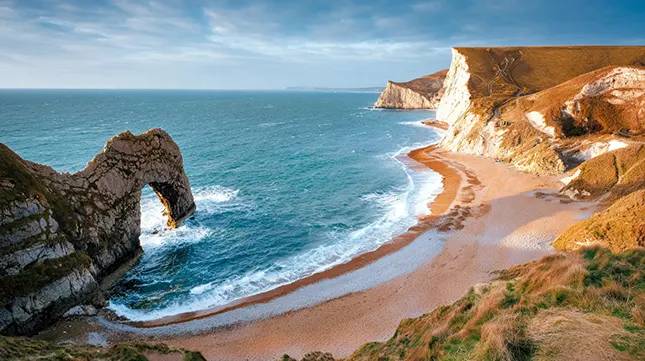
From Poole, Corfe Castle, Swanage, and the Jurassic Coast, a UNESCO World Heritage Site, are all within 30 minutes by road, making it one of the most naturally privileged locations in the South of England.
What Is It Like Living in Poole?
Life in Poole is defined by the harbour. One of the world’s largest natural harbours, covering around 36 square kilometres, shapes the town’s identity, its economy, its leisure culture, and the character of its neighbourhoods. Whether you are walking the harbourside at Poole Quay, watching the Condor Ferries cross to the Channel Islands, or sailing from one of the town’s many clubs, the water is always present.
But Poole is also a proper working town, not simply a tourist destination. It has a strong manufacturing heritage, Sunseeker, the world-renowned luxury motor yacht builder, has been based here since 1969, and a diverse economy that spans marine engineering, retail, healthcare, technology, and creative industries. Lush Cosmetics, founded in Poole in 1995, has production facilities here alongside its global headquarters.
The community is welcoming and well-established. Poole has a strong sense of local pride, in its maritime history, in its football club, in its beaches, and in a town centre that has continued to attract investment and footfall even as many comparable high streets have struggled.
Property Prices in Poole
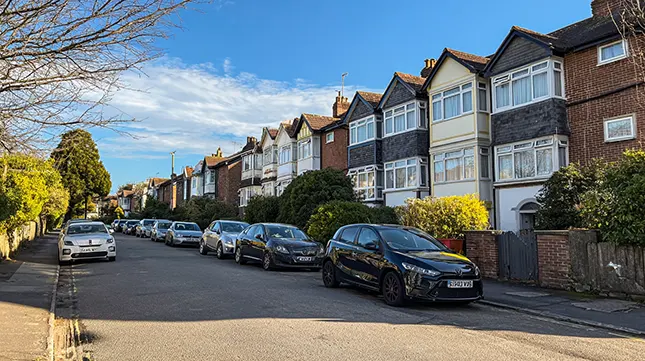
Poole’s property market is one of the most varied in the South of England, with prices ranging from some of the most affordable coastal flats in Dorset to some of the most expensive residential addresses in the country.
The overall average sold price for property in Poole over the last year was £418,272, based on HM Land Registry data updated by Rightmove in February 2026. Across the wider BCP council area, the average house price was £310,000 in December 2025, down 4.5% from December 2024, a correction from the exceptional post-pandemic peak of 2022 and 2023, rather than a sign of structural weakness in demand. The underlying market remains driven by consistent interest from London and Home Counties relocators, excellent schools, and a coastal lifestyle that is simply not replicable elsewhere at this price point.
First-time buyers in the BCP area paid an average of £249,000 in December 2025, while home-movers paid an average of £385,000. Private rents in the BCP area averaged £1,392 per month in January 2026, reflecting strong rental demand across the conurbation.
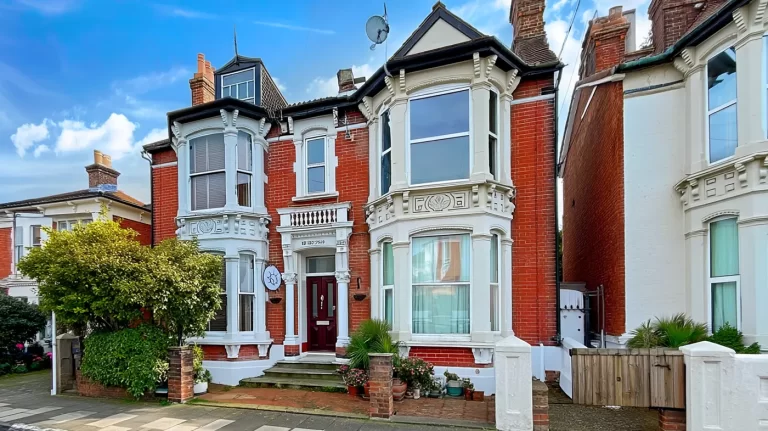
The enormous variation within Poole is important to understand. The most expensive postcode sector in the entire county of Dorset is BH13 7, covering the Canford Cliffs and Branksome Park area, with an average price of around £992,000. At the opposite end, more affordable areas of the town offer entry points well below the national average. In practical terms this means that whether you have a budget of £220,000 or £2 million, Poole has property that will suit you, the key is knowing which neighbourhood you are shopping in.
Sandbanks
Sandbanks needs little introduction. The peninsula jutting into the entrance of Poole Harbour consistently ranks among the most expensive areas of residential property in the world by land value. Waterfront homes command prices well above £2 million, and even modest properties on the peninsula trade at exceptional premiums. For buyers who can afford it, the combination of panoramic harbour views, beach frontage, and absolute exclusivity is unmatched anywhere on the South Coast.
Canford Cliffs and Branksome Park
The twin neighbourhoods of Canford Cliffs and Branksome Park, occupying the south-western edge of Poole between Sandbanks and Bournemouth, are among the most sought-after residential areas on the entire South Coast. Large Victorian and Edwardian houses sit among mature pine woodland, with the beach and Canford Cliffs Chine within walking distance. Average prices here are well into seven figures for the larger detached homes, though smaller properties and flats offer more accessible entry points.
Lilliput
Between Sandbanks and Parkstone, Lilliput offers a quieter, more village-like character with excellent sailing and watersports access directly from Sandbanks Road. Properties here, particularly those with harbour views, command significant premiums, and demand from London buyers remains consistently strong.
Parkstone
Parkstone offers a more accessible price point than the harbourside neighbourhoods while remaining well-placed for both the harbour and the town centre. The area has a strong independent retail and dining scene centred on Ashley Cross, and a good mix of period and post-war housing. It is particularly popular with families given its proximity to the grammar school catchment.
Broadstone
Sitting slightly inland at the northern edge of Poole, Broadstone is one of the town’s most consistently popular family areas. Large detached houses, excellent local amenities, green spaces, and a strong community feel make it a top choice for families upsizing from elsewhere in the region. It is also well-placed for both the grammar schools and the A31 for commuters.
Hamworthy and Upton
On the western side of the harbour, Hamworthy offers some of Poole’s most affordable housing and has been the subject of significant ongoing investment, including the RNLI’s headquarters relocation. Upton Country Park, a 19th-century country estate with walled gardens, woodland walks, and sweeping harbour views, lies immediately to the north and is one of the borough’s most underrated assets.
Canford Heath
Canford Heath is Poole’s largest residential area and one of its most affordable. A mix of 1970s and later housing sits alongside a large area of protected heathland, part of the Dorset Heaths Special Area of Conservation, giving it an unusual green character for an urban neighbourhood. It is popular with first-time buyers and families who want good-sized homes at realistic prices.
Schools in Poole

Education is one of the strongest arguments for choosing Poole as a family home, and the grammar school system in particular draws buyers from across the region.
Poole Grammar School is a selective boys’ school ranked among the top schools in the South West. In 2025, 91% of pupils achieved grade 5 or above in English and maths GCSEs, and the school has a strong track record of Russell Group university progression. It sits on Gravel Hill in BH17, making Canford Heath, Broadstone, and upper Parkstone the most practical catchments.
Parkstone Grammar School is the highest-ranked secondary school in Poole, an outstanding all-girls selective school and consistently among the top all-girls secondaries in England. Around 90% of pupils achieved grade 5 or above at GCSE. It shares the Sopers Lane site with Poole Grammar, making the catchment considerations for both schools essentially the same.
Poole High School has Ofsted “good” status and is Poole’s largest non-selective secondary. It offers a broad curriculum and strong pastoral care and is well-regarded by families across the town.
Beyond secondaries, Poole has a wide range of well-regarded primary schools across its neighbourhoods, and Bournemouth and Poole College, one of the UK’s largest further education colleges, provides an outstanding post-16 offer covering A-levels, T-levels, BTECs, apprenticeships, and higher education programmes.
For higher education, Arts University Bournemouth and Bournemouth University are both within easy reach, making the area a strong draw for mature students and those whose children are approaching university age.
Transport and Connectivity
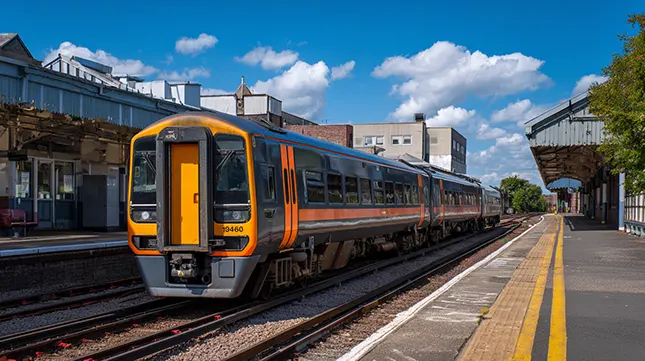
Poole’s transport connections are a genuine practical advantage, particularly for those considering a move from London or the Home Counties.
By train: Poole railway station is on the South Western Main Line, with direct South Western Railway services to London Waterloo in under two hours. Southampton is approximately 40 minutes by direct train. Weymouth and the heart of the Jurassic Coast are accessible to the west.
By road: The A35 connects Poole eastward to Bournemouth and westward to Dorchester and beyond. The A31 links north toward the M27 and M3, providing a direct motorway route to Southampton, Winchester, and London, useful for those who drive to London periodically rather than commuting by rail daily. The A338 connects into Bournemouth’s town centre.
By air: Bournemouth Airport, approximately 15 minutes by road, provides scheduled services to a growing range of European destinations. Heathrow and Gatwick are both reachable in under two hours by car, providing comprehensive international access.
By ferry: Brittany Ferries and Condor Ferries operate from Poole Harbour, with services to Cherbourg, Saint-Malo, and the Channel Islands. For those who travel regularly to France, this is an exceptional practical advantage.
Employment in Poole

Poole’s economy spans several major sectors, with manufacturing, marine engineering, creative industries, retail, and healthcare all well represented.
Major employers include:
- Sunseeker International — one of the world’s leading luxury motor yacht manufacturers, employing over 3,000 people across Poole
- Lush Cosmetics — headquartered and manufacturing in Poole, a major employer and an internationally recognised brand
- RNLI (Royal National Lifeboat Institution) — headquartered in Poole, with a significant presence at its Hamworthy operational base
- BCP Council — as the local authority for the entire BCP area, a major public sector employer
- Siemens — with an engineering and technology presence in the area providing skilled employment
For professionals who work in London, the under-two-hour direct train journey makes Poole a realistic option for those who need to be in the capital several times a week. The significant shift to hybrid working since 2020 has accelerated this trend considerably, and Poole has seen substantial inward migration from London and the South East as a result.
Things to Do in Poole
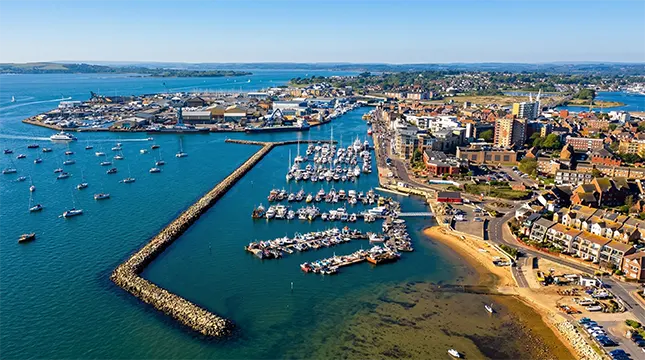
Living in Poole means having an extraordinary range of leisure, cultural, and outdoor activities available year-round.
Poole Harbour and the Quay
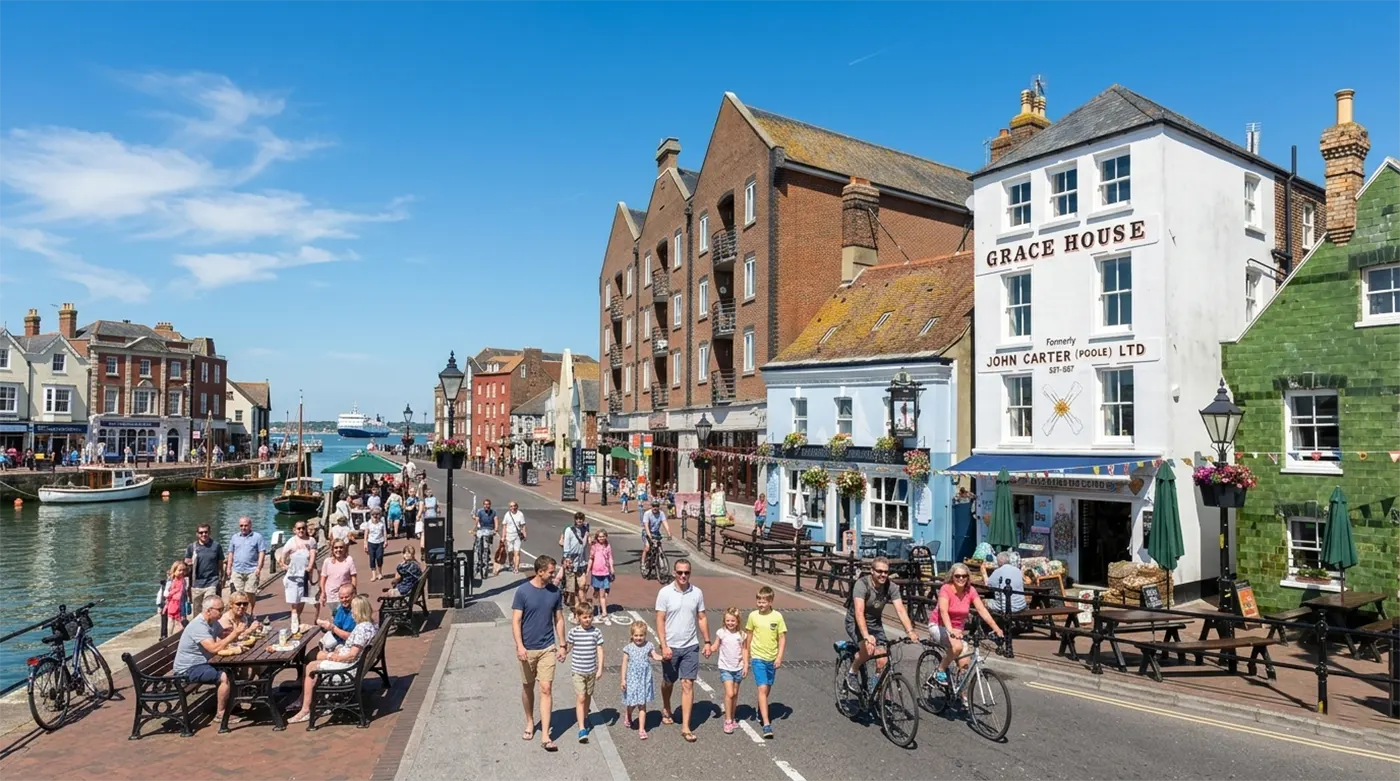
Poole Quay is the social heart of the town, a working harbourside lined with restaurants, bars, and cafés, from which boat tours depart to explore the harbour, Brownsea Island, and the Jurassic Coast. The harbour itself is a world-class sailing destination, home to multiple yacht clubs and water sports centres.
Brownsea Island
Owned and managed by the National Trust, Brownsea Island sits in the middle of Poole Harbour and is accessible by ferry from Poole Quay. Famous for its population of rare red squirrels, lagoons rich in birdlife, and peaceful woodland walks, it is one of the most rewarding natural destinations on the entire South Coast. It was also the site of Robert Baden-Powell’s first Scout camp in 1907.
Poole Museum — Reopened November 2025
One of Poole’s most exciting recent developments is the reopening of Poole Museum in November 2025, following a seven-year, £10 million heritage-led transformation. The project, funded by the National Lottery Heritage Fund, Arts Council England, Historic England, and BCP Council, has restored three historic listed buildings (Oakley’s Mill, Scaplen’s Court, and the medieval Town Cellars), more than doubling the public space without any new construction.
The transformed museum features three new maritime galleries (Harbour Life, Setting Sail, and Shipwreck!), the Poole Iron Age Logboat, nearly 10 metres long and the largest ever found in Southern Britain, now on open display for the first time, and two flexible exhibition galleries bringing major touring exhibitions to Poole. Admission remains free, and the museum’s new café, The Old Town Salt Pig, is a collaboration with the well-loved local food brand.
Beaches
Poole’s beaches are among the finest in England. Sandbanks Beach, consistently rated among Europe’s best, offers clean water, golden sand, and water sports. Canford Cliffs and Branksome Chine provide more sheltered options popular with families, while the beaches around Studland (accessible by the Sandbanks ferry) offer a wilder, more natural experience including a nature reserve managed by the National Trust.
Green Spaces and Country Parks
Upton Country Park offers 19th-century walled gardens, woodland, and sweeping views across the harbour, a spectacular free-entry destination that many visitors to Poole never discover. Hamworthy Park and Poole Park, the latter home to a boating lake, tennis courts, and children’s play areas, provide green space closer to the town centre. The vast Canford Heath Nature Reserve borders the residential areas of north Poole.
Arts and Culture
The Lighthouse Arts Centre in Poole and Bournemouth is the UK’s largest arts centre outside London, hosting the Bournemouth Symphony Orchestra, one of England’s leading regional orchestras, alongside theatre, comedy, cinema, and exhibitions throughout the year. The newly transformed Poole Museum has significantly strengthened the town’s cultural offer.
Shopping in Poole

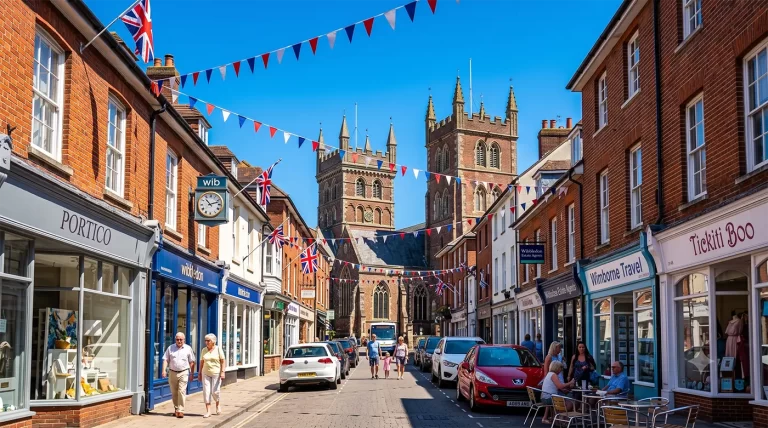
The Dolphin Shopping Centre anchors the town centre retail offer with national chains and anchor stores. The pedestrianised Old High Street connects the modern centre to the historic Old Town and Poole Quay, and the Kingland Crescent development has brought further retail and leisure space to the town.
For independent retail, the areas around Poole Old Town and Ashley Cross in Parkstone offer a genuinely strong independent shopping, café, and dining scene. Weekly markets at Poole Quay and around the town sell local produce, fresh seafood, and artisan goods.
The Gunwharf Quays-style outlet experience is served by the retail offer along the conurbation at Castlepoint in Bournemouth, approximately 15 minutes by road, while Southampton and its major shopping centres are under an hour away.
Cost of Living in Poole

Beyond property, Poole’s cost of living is broadly comparable to other South Coast towns of similar size, and significantly lower than London or the large cities of the South East.
Groceries are well-served by a full range of supermarkets across the town, including Tesco, Sainsbury’s, Waitrose (in several locations), Lidl, and Aldi. Eating out ranges from fish and chip shops at the Quay to excellent independent restaurants in Parkstone and Old Town. Average private rents in the BCP area were £1,392 per month in January 2026, well below London equivalents and at the higher end for the South West, reflecting Poole’s desirability as a rental market.
Council tax is levied by BCP Council and varies by property band. The BCP council area tends to have council tax rates broadly in line with comparable South West authorities.
Your Move to Poole with R.H. Pardy Moving & Storage
R.H. Pardy Moving & Storage has been helping people move to and from Poole for over a century. Based in Christchurch with a team that covers the entire BCP area and beyond, we combine the heritage and experience of a long-established local business with the professional standards and BAR accreditation that give you complete peace of mind.
Our services for customers moving to Poole include:
- Free home visit and video surveys for an accurate, no-obligation quote
- Professional packing and unpacking services
- Specialist handling for antiques, art, and fragile items
- Secure short and long-term storage
- Removals insurance to protect your belongings throughout
Whether you are moving from London, elsewhere in the South of England, or further afield, our experienced team will handle every aspect of your relocation with professionalism and care.
To find out more, call us on 01202 152 120 or 01425 508 267, or contact us online for a free, no-obligation quote. We look forward to welcoming you to Poole.
Frequently Asked Questions About Moving to Poole
Is Poole a good place to live? Yes, consistently. Poole offers an exceptional combination of natural beauty, strong schools, a diverse economy, good transport connections, and a genuine community feel. It is particularly well-suited to families (drawn by the grammar schools), London professionals and retirees seeking a coastal lifestyle, and anyone who loves sailing, watersports, or the outdoors.
What are house prices like in Poole? The overall average sold price in Poole over the last year was £418,272, based on HM Land Registry data updated February 2026. Prices range enormously, from around £220,000 for a flat in Canford Heath to well over £2 million for waterfront properties in Sandbanks. The mid-market (Parkstone, Broadstone, Hamworthy) offers good family homes from around £300,000 to £550,000.
What are the best areas to live in Poole? The “best” area depends on your priorities. For waterfront exclusivity: Sandbanks and Canford Cliffs. For family living with grammar school access: Broadstone, Parkstone, and Canford Heath. For a village feel with harbour proximity: Lilliput. For affordability: Canford Heath and Hamworthy.
How far is Poole from London by train? Direct South Western Railway services from Poole station reach London Waterloo in under two hours. Services run throughout the day, making Poole a realistic option for professionals who travel to London regularly without needing to be there every day.
What are the best schools in Poole? Poole Grammar School (boys, selective) and Parkstone Grammar School (girls, selective) are the strongest state secondaries in the BCP area and among the top schools in the South West. Both require the BCP grammar school entrance assessment. Poole High School is a well-regarded non-selective secondary. Bournemouth and Poole College provides excellent further education.
What has happened at Poole Museum? Poole Museum reopened in November 2025 following a seven-year, £10 million transformation funded by the National Lottery Heritage Fund, Arts Council England, Historic England, and BCP Council. The museum features three new maritime galleries, the Poole Iron Age Logboat on open display for the first time, and a new café in the beautifully restored Scaplen’s Court. Admission remains free.
Does R.H. Pardy cover removals to Poole? Yes. R.H. Pardy Moving & Storage covers Poole and the entire BCP area, as well as the New Forest, Ringwood, Romsey, Wimborne, Lymington, and surrounding areas. We also handle long-distance moves from anywhere in the UK, European removals, and international shipping.