



Thinking of moving to France from the UK in 2026?
It’s not just about hopping on a ferry or Eurostar, it’s a legal, logistical and lifestyle transition.
Even today, for Brits, moving to France is still one of the most popular European relocations; better weather, amazing food, huge lifestyle variety (city, coast, countryside), and you’re never that far from home.
Sadly, since Brexit ended freedom of movement, things have changed a lot, and proper planning is essential for a smooth move from visas and residence permits to cost considerations, healthcare, and everyday life in France.
It might be a little more complicated now, but it is far from impossible to enjoy a full life in France.
The key is to plan properly; visas, paperwork, customs, healthcare, and logistics must be in place so that your move can still be smooth and straightforward.
This guide covers what UK movers need to know in 2026, along with a few practical checklists to keep your relocation on track.
Let’s get your journey started.
A quick snapshot of the most important things to know before relocating to France from the UK
Our guide covers visas, healthcare, costs, property, jobs, and moving logistics at a glance:
- Why Move to France – Better lifestyle, diverse locations, and often lower living costs attract UK families.
- Visa & Residency Rules – Long-stay visas and a Carte de Séjour are now essential post-Brexit.
- Healthcare System – France offers high-quality care, but you must register and get interim cover.
- Cost of Living – Prices vary widely, with rural areas far cheaper than major cities like Paris.
- Working in France – Jobs require visas, with demand in sectors like teaching, tech, and healthcare.
- Moving with Pets – Strict rules apply, including microchips, rabies vaccines, and certificates.
- Buying Property – The process differs from the UK, with notaires handling legal transactions.
- Banking Setup – Opening a French account can take time and requires proof of residency.
- Studying in France – Affordable education with visa requirements for stays over 90 days.
- Moving Your Belongings – Choose between full-load or shared services, with customs paperwork required.
- Choosing a Removal Company – Experienced international movers ensure a smoother, compliant relocation.
Plan ahead, follow the correct processes, and your move to France can be smooth and successful.
The Big 2026 Reality Check: UK Citizens Are Now “Non-EU” for France

Before you can begin your move to France, you must be aware of what is available to you regarding entry requirements.
With UK citizens no longer entitled to freedom of movement in France. Your rights depend on:
- How long you’re staying.
- Why you’re moving (work, retirement, study, family, etc.)
- Whether you already had legal residency rights under the Withdrawal Agreement
For most people planning a new move in 2026, it boils down to this:
Visiting France short-term: the 90/180 rule still applies
You can travel visa-free for up to 90 days in any 180-day period across the entire Schengen Area (not just France). For further guidance and information, visit the UK government’s foreign travel advice website page.
Staying longer than 90 days: you’ll need a long-stay visa.
If you’re moving to France (not just visiting), you’ll normally need a long-stay visa arranged before you go.
France’s official visa portal is France-Visas and applications can typically be started months ahead of departure.
New Travel Systems You’ll Notice in 2026: EES Now, ETIAS Later
If you have been in the planning process for a while, there are some new changes being introduced.
Even if you’re relocating (rather than holidaying), you’ll still feel changes at borders while travelling in and out of France.
The EU’s EES digital border system – (Entry/Exit System) began operations on 12 October 2025 and is being phased in, with full operation expected by 10 April 2026.
Expect first-time biometric checks (photo/fingerprints) on entry and less reliance on manual passport stamping.
Later this year, ETIAS will become operational, which is a pre-travel authorisation for visa-exempt visitors.
The EU states it’s due to start operations in Q4 of 2026, and until it goes live, travellers don’t need to do anything. You can discover exactly what is required when it is implemented via the European Union website.
Bottom line: 2026 travel is getting more “systemised”. It’s not scary, but it can mean longer queues at peak times, especially at the Channel crossings.
Visas for Moving to France: Choosing the Right Route
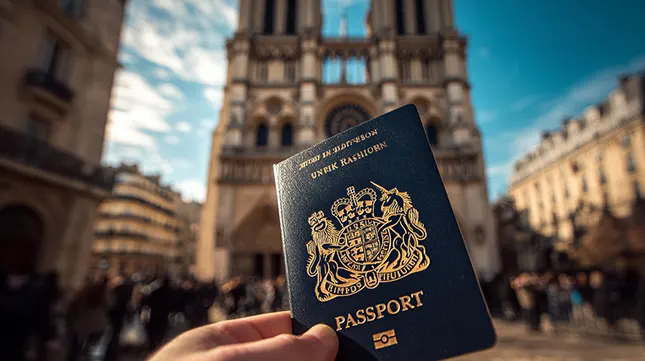
There are plenty of reasons Brits want to live in France; however, most UK movers fall into one of these buckets:
- Work visa / employer-sponsored move.
- Self-employed / business
- Visitor / retiree-style long stay (no work)
- Study
- Family route
France-Visas is the official place to confirm which one fits your situation and what documents you’ll need.
From here, you can ascertain exactly what type of visa (depending on what your plans are) you will need to apply for.
After you arrive: what about a residence permit (titre de séjour)? Many long-stay arrangements involve steps after arrival (for example, validation of your long-stay visa or applying/renewing a residence document depending on your status and category).
If you have Withdrawal Agreement rights (i.e., you were resident before the cut-off), renewals are typically handled via your prefecture, and timing matters.
Getting this part of your journey for a life in France correct will save you a huge amount of stress and disappointment later.
Customs & Moving Your Belongings: What Changed After Brexit?

Once you have decided which visa you are applying for, the next stage is to decide if you are going to take all your belongings with you.
If you’re physically moving household goods from the UK to France in 2026, assume customs paperwork is part of the process.
There are some vital Q & A’s many UK expats have:
- Can you move household goods tax-free?
Yes — if you qualify under Transfer of Residence rules. French Customs explains that personal belongings can be exempt from duties/taxes when you’re transferring your primary residence, with conditions (including that items have generally been used/owned beforehand rather than bought new for the move).
- Why inventories matter more than people expect.
Customs clearance is where DIY moves can get messy. You’ll typically need:
- a detailed inventory of your belongings
- supporting relocation documents
- correct timing and declarations
A removals company experienced in European moves and customs, such as R.H Pardy, can take that admin off your plate (and reduce border-day surprises).
- Bringing Pets to France from the UK in 2026
If you’re moving with a dog/cat/ferret, the UK government guidance is clear:
- You’ll need an Animal Health Certificate (AHC) issued by a vet for EU travel.
- The AHC is valid 10 days for entry into the EU (plus additional validity for onward EU travel / return to GB). See the GOV.UK website.
Practical tip: don’t leave this too late. Vet appointments get booked up around popular travel windows. You don’t want to put your pets under any unnecessary stress or worse, be unable to take them with you.
Driving in France: What About Your UK Licence?

If you are planning to move permanently to France, it is important to ensure you are legal to drive there.
Driving rules can be misunderstood because the answer depends on when your licence was issued and your specific situation.
France’s official public service guidance notes that you can drive in France with certain European licences, and it also references UK licences issued before 2021.
The official line states that license exchange becomes mandatory only in specific scenarios (expiry, certain offences, adding categories, etc.).
If you’re unsure, treat licence admin like visa admin: verify early, because it affects insurance, vehicle registration, and day-to-day mobility.
Healthcare in France: Getting Set Up Properly

If you’re moving abroad on a permanent basis, you’ll no longer automatically be entitled to medical treatment in the UK under normal NHS rules.
It is great to know that France has an excellent healthcare system; however, you’ll want to get registered as soon as you’re eligible.
UK government guidance explains how UK nationals can apply for healthcare cover in France (including applying via local CPAM for PUMa) and what the typical timeline looks like for receiving a social security number and then a carte vitale.
Many residents also choose a Mutuelle (top-up insurance) to reduce out-of-pocket costs, especially in the early stages while paperwork settles.
Alternatively, there are plenty of companies vying to offer you private health insurance, which is particularly helpful if you suffer from and on-going illness.
Money & Admin: The Unsexy Stuff That Makes Life Easier

As well as all the “must-do” paperwork chores when moving to France, there are other things that need your attention, too.
Here’s what tends to make a noticeable difference to how fast you feel “settled”:
- A French bank account (for rent, utilities, salary, direct debits)
- A realistic monthly budget (France varies massively by region)
- A plan for moving savings (exchange rates can bite on large transfers)
- Digital and physical copies of key documents (you’ll use them constantly)
The cost of living isn’t static; it moves, sometimes quickly.
France is no different to the UK, with prices for food, energy and fuel continuing to rise and fall depending on wider economic conditions.
Before relocating, it’s worth checking current cost-of-living data using a resource like Numbeo, which offers helpful comparisons and location-specific insights across France.
Cost of Living Across France in 2026

France is not an expensive country by Western European standards, but as with all countries, costs vary considerably depending on where you settle.
Paris operates in a different financial league to almost everywhere else, while large swathes of rural France remain genuinely affordable by UK measures.
Here is a broad overview of approximate rental costs and transport expenses across key locations:
| City / Region | 1-bed Rent (city centre) | Monthly Transport |
| Paris | €1,400+ | €86 |
| Lyon | €750–€900 | €75 |
| Bordeaux | €700–€850 | €65 |
| Marseille | €650–€800 | €55 |
| Rural areas | €450–€600 | Car essential |
Beyond accommodation, everyday costs such as fresh food from local markets, dining out at neighbourhood restaurants, and public leisure facilities tend to be noticeably cheaper than in British cities. Utility bills in more temperate southern regions are also typically lower than in the UK.
For detailed, user-generated cost comparisons between specific French towns and UK equivalents, Numbeo remains one of the most reliable free tools available.
French Language & Integration: The Fastest Way to Feel at Home
Do you speak French? Is it important that you do?
Firstly, many Brits leaving the UK for France don’t speak the language (at first)!
You don’t need perfect French on day one, but it is helpful to have enough to handle:
- appointments
- basic admin
- neighbours / local services
- tradespeople and deliveries
In real life, even modest French makes everything smoother, and locals generally respond well when you make the effort.
For the long term, learning the language is the best way to quickly integrate fully into the lifestyle, and of course, it will help you make new friends that much quicker.
Your 2026 Moving to France Checklist (Quick Version)

To recap — and as a helpful aide-memoire — here’s a checklist of what you’ll need to have in place before you can begin your move to France with confidence.
Before moving day, aim to have:
- ✅ The correct visa route confirmed and in progress
- ✅ Accommodation arranged (even temporary)
- ✅ Customs plan for household goods (inventory + documentation)
- ✅ Healthcare plan (CPAM/PUMa route, cover during the first months)
- ✅ Pet paperwork (AHC + vaccinations) if relevant
- ✅ Awareness of 2026 border systems (EES now; ETIAS expected later in 2026)
With these essentials organised in advance, you’ll be well-positioned for a smooth and compliant move to France. Good preparation removes much of the uncertainty and allows you to focus on settling into everyday life once you arrive.
Education in France: What UK Families Should Know

Education in France is well-regarded and widely accessible for expat families, offering both public and private options.
State schools (“écoles publiques”) are free and open to residents, with instruction in French.
Public schooling is compulsory from age 3 to 16, beginning with maternelle (preschool), through école primaire (primary), then collège and lycée (secondary).
Many UK families choose bilingual or international schools, particularly in larger cities, to support language transition and offer curricula closer to the British system.
International school options vary widely in tuition and teaching style, so budget accordingly.
For detailed tuition estimates and living costs related to studying in France, resources like StudyConnectFrance are helpful.
For first-hand guidance and school listings tailored to your relocation zone, check the local mairie (town or city hall) for schools in your chosen area and expat forums before committing and begin applications early if aiming for sought-after international programmes.
Weather in France: What UK Expats Can Expect
Sunny weather conditions for more of the year are a top priority for many UK relocators and a major consideration when it comes to where to settle.
France’s climate is as diverse as its geography, offering something for almost every preference.
In the north and northwest, expect mild summers and cool, wet winters, broadly similar to northern UK patterns but typically sunnier.
Central France enjoys warmer summers and chilly winters, while the south (Provence, Côte d’Azur) boasts long, hot summers, mild winters, and lots of sunshine.
Coastal regions like Brittany have more maritime influence, meaning moderate temperatures year-round with frequent Atlantic breezes.
In contrast, mountainous areas (Alps, Pyrenees) see snowy winters ideal for skiing, and warm summers perfect for hiking.
Weather patterns influence lifestyle and property preferences (e.g., energy costs, garden use, holiday habits), so think about the climate when choosing your French destination.
For up-to-date regional climate data and planning tools, national meteorological sites like Météo-France are invaluable.
France Property Market 2026: A Snapshot for UK Expats

At some point if not immediately, expats settling permanently will want to purchase a French home.
The French housing market in 2026 remains stable, with local variations that matter for UK buyers.
National figures suggest modest price rises overall — around low single digits — with stronger growth in sought-after city suburbs and smaller towns outside major metropolises, while some central urban areas have seen softer movement.
Check out the latest official statistics for a deeper delve into the French property market.
Average property prices vary widely by region, from relatively affordable inland areas up to premium coastal and urban zones.
Factors shaping the market include solid rental demand in university cities, continued interest from foreign buyers, and a renewed focus on energy-efficient homes.
The outlook for future purchases in 2026 looks balanced: interest rates have stabilised compared with recent volatility, and buyer confidence is steady, though strong demand still outstrips supply in many desirable districts.
For UK expats, the post-Brexit landscape means careful fiscal planning and early financing checks are essential. French mortgage terms and eligibility can differ from UK norms, so expert advice is recommended before making offers.
The good news is that prices remain low in many areas when compared to the UK. It is common to find larger homes sitting on sizeable plots for well under what you would pay at home, particularly if you are a dab hand at renovating.
The best way to get a feel for the market in your chosen area is via popular online portals such as French-Property.com and Rightmove.
Moving Your Belongings from the UK to France

Once the paperwork is in order, the physical move itself requires just as much careful thought.
European removals to France are considerably more complex operations than domestic house moves, and choosing the right company to handle it makes a significant difference to how your first weeks in France unfold.
There are two primary service types available. A full-load removal gives your household goods exclusive use of a dedicated vehicle throughout the journey, with direct collection from your UK address and delivery to your French door.
This offers the greatest flexibility in timing and is the fastest option for complete households.
A part-load or groupage service places your belongings alongside other consignments heading to France.
Costs are lower because you pay only for the space your goods occupy, but delivery windows are broader. This works well for smaller households, second home moves, or anyone with a flexible schedule.
Regardless of which service you choose, your removal company will need a detailed inventory of everything you are transporting.
Since Brexit, this list forms the basis of the customs declaration required to move household goods between the UK and France.
All items should have been owned and in personal use for a minimum of six months prior to the move to qualify for duty-free importation.
For guidance on your rights and what to look for when choosing an international removal company, the British Association of Removers provides those moving to Europe with a straightforward and impartial resource.
Need Help Moving to France? RH Pardy Removals Can Manage the Whole Process
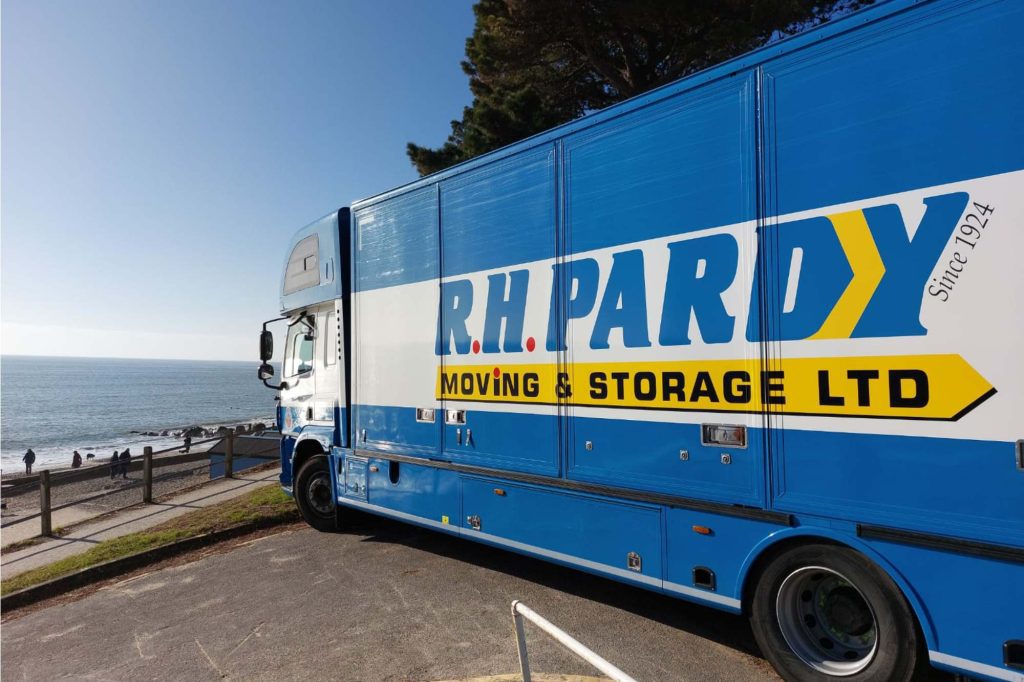
If you’re relocating to France in 2026, the easiest way to reduce stress is to use a removals company that handles European removals day in and day out, including advice and guidance on the practical stuff that trips people up (packing, loading, transport planning, and customs paperwork).
RH Pardy Removals offers professional European moving services tailored to your exact relocation, no matter where you are headed in France. Whether you’re moving a few key items or the contents of a full family home, we can handle it for you.
To get advice and a no-obligation quote, contact the team:
- Call: 01202 152 120
- Email: sales@pardyremovals.com R.H Pardy Moving & Storage Ltd
FAQs: Moving to France from the UK in 2026
Do UK citizens need a visa to live in France?
Yes. Since Brexit, UK nationals are treated as third-country nationals and require a long-stay visa for any stay exceeding 90 days. The type of visa depends on your purpose of stay, whether work, retirement, study, or family reunification. Applications are submitted through the France-Visas portal before you leave the UK.
How long does it take to get a French residence permit?
Processing times for the Carte de Séjour vary by prefecture, but applicants should expect several weeks to several months. Submitting your application promptly after arrival and ensuring your documentation is complete is the best way to avoid unnecessary delays.
Can I use my UK driving licence in France?
Yes, for the first year after you take up residency. After that, UK licences must be exchanged for a French equivalent. The exchange process involves submitting your licence to the préfecture along with your residence permit and a translation if required. The process is not instant, so begin the application well before your UK licence expires as valid driving entitlement.
Is it expensive to move household goods from the UK to France?
The cost depends on the volume of goods, your UK collection point, your French delivery address, and whether you opt for a full-load or part-load service. As a broad guide, smaller shipments via groupage can cost from around £2,500, while full household removals typically range between £6,500 and £10,000. A free home survey from R.H. Pardy will give you an accurate figure based on your specific circumstances.
What happens to my NHS entitlement when I move to France?
Your entitlement to NHS treatment ceases when you become a permanent resident of France. You will need to register with the French health system through Assurance Maladie as soon as possible after arrival. Until that registration is confirmed, you should hold private health insurance. The UK Global Health Insurance Card (GHIC) provides some emergency cover during the transition period but is not a substitute for full French health registration.
Do I need to pay tax in both the UK and France?
Not on the same income. The UK and France have a double taxation treaty that prevents the same earnings being taxed twice. However, you will need to notify HMRC of your departure using a P85 form and register with the French tax authorities once you are resident. If you retain UK income sources such as property rental or a pension, the rules around where that income is taxed can be nuanced. Professional tax advice from an adviser experienced in cross-border UK-France taxation is strongly recommended.